

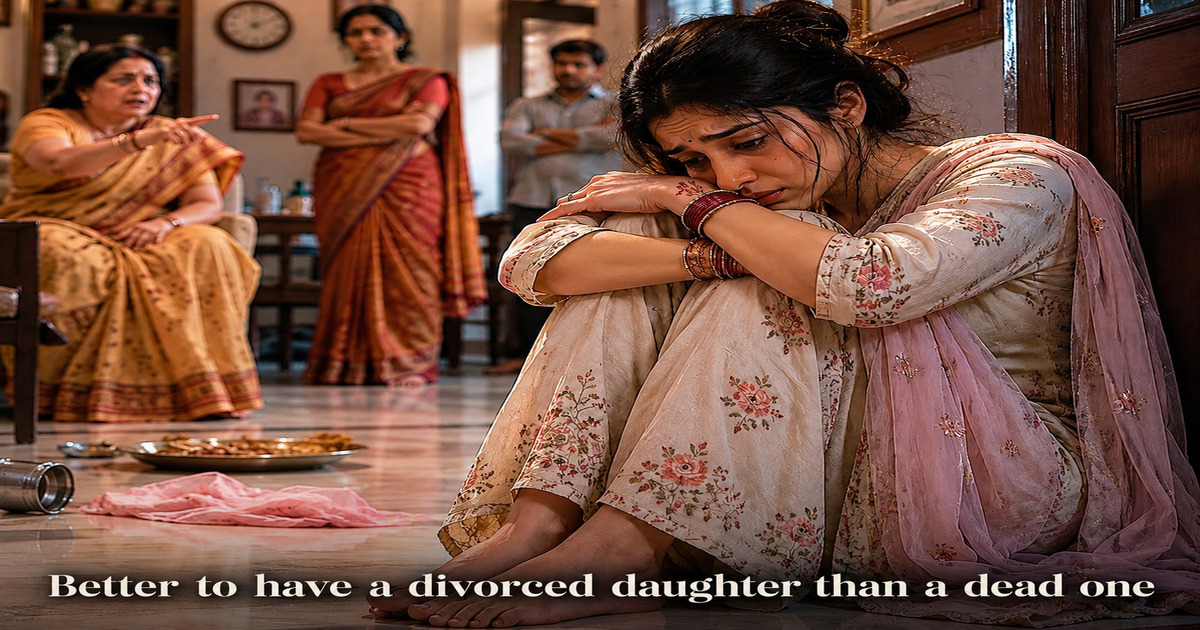


DOWRY DEATH IN 2026: WHEN LAW EXIST BUT LIVES STILL END
A Critical Analysis
Dipika Nagar was 24. Married for just eighteen months. Twisha Sharma was 33, a face known in Telugu cinema, married only five months before she died. Soma did not survive fifteen months of marriage. Three women. Three families. Three cases in just six months of 2026. And yet, India has had the Dowry Prohibition Act since 1961, and Section 304-B of the IPC making dowry death a specific criminal offence since 1983.
Over six decades of law. Still the funerals continue.
The Gap Between Law and Reality
India’s legal framework on dowry is, on paper, among the strictest in the world. Dowry death carries a minimum seven-year sentence. The burden of proof is reversed — the husband’s family must prove innocence. The PWDVA (2005) adds civil protection. Women can file complaints without going to a police station. Every district has a Protection Officer.
So why are Dipika, Twisha, and Soma dead?
Because laws written on paper do not enter homes. The real battlefield is not the courtroom. It is the kitchen, the bedroom, and the silence that surrounds a young bride in her new household. The law reaches her only after she is gone.
Where the System is Failing
The first and deepest failure is social normalisation. In large parts of northern India, dowry is not seen as a crime. It is seen as a custom, a gesture, a social obligation. Families negotiate it openly. Even educated, employed families participate. The very women who are “financially independent and equally qualified” — as is rightly observed — still enter marriages where their worth is calculated in cash, cars, and gold. Education has not yet dismantled this belief system.
The second failure is police and family complicity. Most dowry deaths are registered as suicides or accidental kitchen fires in the first hours. FIRs are delayed. Evidence is tampered. In-laws make phone calls. Money changes hands. By the time a proper investigation begins, the truth is buried with the woman. The investigation machinery is slow, biased, and often sympathetic to the accused family rather than the victim.
Third, pre-marriage intervention is absent. The system only activates after death. There is no mechanism to detect or respond to ongoing harassment before it becomes fatal. A woman being tortured for dowry has no safe, confidential, accessible helpline that results in swift action. The few that exist are understaffed and under-trusted.
Fourth, social pressure silences victims. Most young brides do not report dowry harassment because they fear humiliating their parents. Their parents, who spent everything on the wedding, fear social shame more than they fear losing their daughter. The very patriarchal values that created dowry culture also prevent women from speaking up against it.
Fifth, conviction rates remain shockingly low. Long trials, witness pressure, compromised forensic evidence, and overburdened courts mean that most accused in dowry death cases walk free or receive minimal sentences. The message this sends to society is clear: you can do this and survive it.
What More Must Be Done
First, mandatory pre-marriage counselling at registration offices — for both families — explaining legal consequences in plain language, not legal jargon.
Second, fast-track dowry courts in every district with a six-month trial deadline. Justice delayed is justice denied — and a signal to perpetrators.
Third, anonymous reporting technology — a state-monitored app where a woman or neighbour can report ongoing dowry harassment before it becomes a death. Immediate, discreet response teams, not police vans that alert the accused.
Fourth, school curriculum reform. Children must learn from Class 6 onwards that dowry is a crime — not through a paragraph in civics, but through dedicated sessions, case studies, and open discussion.
Fifth, economic accountability. Bank transactions and wedding expenditure above a threshold must be declared. Gifts above a legal limit should require documentation. Follow the money.
Sixth, social boycott campaigns at community level, led by local panchayats and RWAs. Families that demand dowry should face public consequences — not celebration.
The Uncomfortable Truth
Reservation bills and recognition awards are necessary. But they are symbols. The woman who receives a National Award in Delhi and the woman beaten for a motorcycle in Meerut live in the same country — but different Indias. Until the social India catches up with the constitutional India, young women will keep dying in kitchens that were never safe to enter.
Dipika, Twisha, and Soma were not statistics. They were lives. The real question is not whether India has the laws. It is whether India has the will.


I think it’s the mindset. Mostly people r reluctant to accept daughter in law as daughters.
The mindset of not feeling bad in accepting gifts or cash without even thinking of the capabilities of other side.
Mindset of superiority
Law enforcement agencies have again the same mindset. Fail to provide justice in most of the cases.
Problem exist every where whether one is economically advanced/ middle or below .
Solution is again in the mindset. Learning the real meaning of
Women empowerment.
Thank you for taking the time to read this and for your honest words. I really appreciate your comment..🙏