

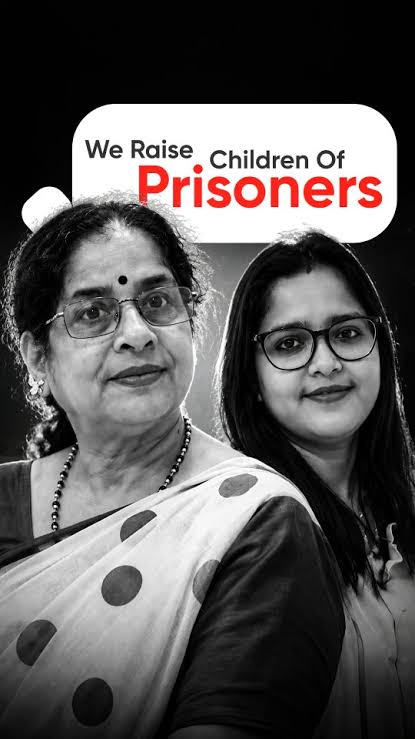


In 2003, Abharani Choudhury walked into Jharpada jail in Bhubaneswar and saw something she could not forget. Inside the prison were children who had done nothing wrong. Some were living with their incarcerated mothers; others were growing up surrounded by adults and conversations shaped by crime, punishment and prison life.
Two children in particular stayed with her; Bebina, sitting in her mother’s lap, and Gobinda, who was with his grandmother. The children were being exposed to a world they had never chosen.
Abharani wondered a simple but difficult question: why should a child’s future be determined by a parent’s crime? She took the concern to the jail authorities and the Women and Child Development Department.
That year, she established Madhurmayee Aadarsha Siksha Niketan in Bhubaneswar to give children of prisoners something they were missing most, a normal childhood. But this was not Abharani’s first encounter with people living on society’s margins.
Her social work had begun several years earlier. In 1997, she and her late husband, Madan Mohan Behera, began working with marginalised communities. Through Odisha Patita Udhar Samiti (OPUS), they worked on issues affecting sex workers and other vulnerable groups, including health, counselling, rights and rehabilitation. The prison children’s shelter became another chapter in that work.
It was not simply a hostel. Abharani wanted the children to have food, education, security and, importantly, the affection and sense of family that imprisonment had taken away from them. The institution was built and sustained largely through public donations.
There were struggles along the way. The shelter faced administrative and financial difficulties, including a period when its future was uncertain because of disagreements over government requirements and registration. Yet the work continued.
Over the years, the small initiative grew into a place that has cared for hundreds of children. According to reporting in The Times of India, more than 200 children had passed through the institution by 2025, with many moving into employment and independent lives. Around 36 children were then living at the shelter.
Abharani’s work has also extended beyond prisoners’ children. OPUS has worked on women’s welfare, rehabilitation, child development, support for homeless people and care for vulnerable communities. She has continued to speak about the rights and dignity of people who are often pushed to the margins.
Her daughter, psychologist Matrumayee Priyadarshini, now works alongside her at Madhurmayee. Together, they focus not only on schooling but also on skill development, higher education and helping the children build independent futures.
In 2023, Abharani was among those recognised as an Art of Giving Hero for her social work.
For more than two decades, her work has centred on an idea that is easy to understand but difficult to put into practice: a child should never have to serve a sentence for someone else’s crime.


What a beautiful initiative 🙏