



Gen Z, France and India: The Same Questions
A Burning Question
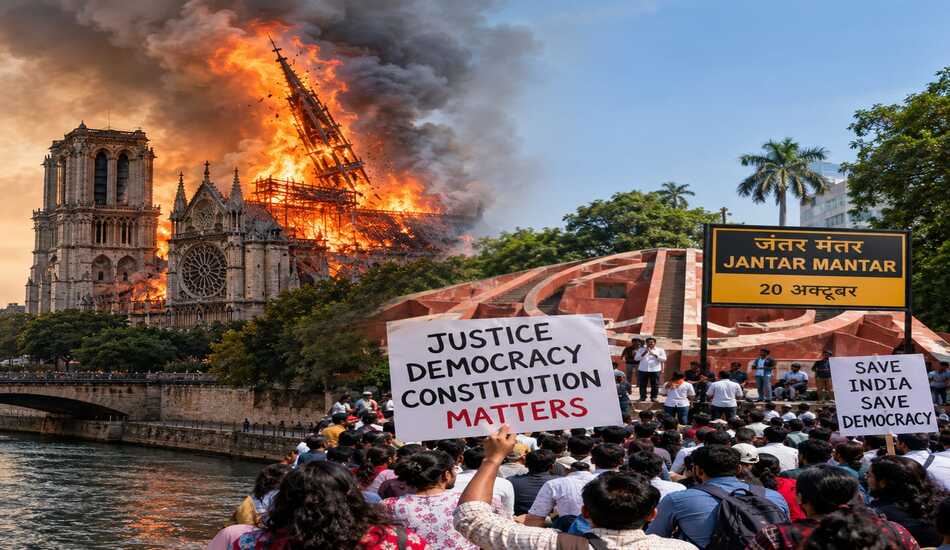
A new generation, Gen Z, has started a movement that began in France and has now reached India. Many ask why there is so much anger among Gen Z. In social science, no single incident is fully responsible for such an event. Let us compare France and India, where some things are the same and some are not.
Where It All Began
Both began with a war against the education system. In India it started with the NEET exam paper leak. Students came out on the streets, it soon became a political war, and political groups entered it. In France it started with the poor condition of schools. Teachers were not available, and fans and air conditioners did not work. It began in secondary schools from 17 September to the first week of October, and spread to around 1000 schools.
Who Is Responsible?
So who is responsible? The same question arises in India. Who is responsible for misgovernment, and whom are we holding accountable? Slowly it became the government’s responsibility, and both movements wanted to change it. Both raise a bigger question: has democracy become an old model?
The Gap Between Theory and Practice
We use the term Gen Z for those born after 1997. Why is this generation not comfortable with this system, while the older generation lived with a false or hypocritical democracy? Something is written in the Constitution, something else happens in the courts, and something different in schools and exams. Gen Z is not hypocritical like us. They ask why there is a gap between the law books and what is available on the ground.
In India we say we will spend 6 percent of GDP on education, but the fact is only 2.5 percent. Every year 10 lakh youth become unemployed, and jobs are few. In France, too, people ask why there is such a gap between rich and poor. Why do old style schools have no fans, no teachers and no canteen when temperatures cross 35 degrees? If this is the reality, why were promises made? The older generation compromised, but the new generation is not willing to.
From Print Media to Social Media
Earlier, paper media was the only means of communication. Old print media ran with the help of the government, so little was written against it. They criticised the government politely, in what we call mild criticism. Then came electronic media, where TRP made content a matter of choice. Now social and digital media are available, and one small piece of news can spread like fire.
Lesson from the Arab Spring
The same happened in the Arab Spring. A vegetable seller set himself on fire in Tunisia, and the news spread to other countries. This generation has chosen it as the new way to spread its grievances, not to Parliament but to a larger audience. They do not trust Parliament. They want to fix responsibility on an actual person or system. That is why the Gen Z movement became so loud.
Is Democracy Now Outdated?
Is democracy now outdated? Everyone was offered representation, and the Constitution promised equality to all, but it did not reach common people. It remains with the elite class, who study in better government schools, while common people study in poor ones. The older generation was used to surviving in these conditions, but Gen Z is not ready to accept this.
In both countries, personal grievances turned into national grievances. In India the paper leak led to a demand for the Education Minister’s resignation. In France the same demand arose, and school infrastructure became a national issue.
Failure of Political Parties
All political parties have become defunct, yet all are the same. In 2011 the Anna movement began with a good cause and a promise of good governance. But when the Aam Aadmi Party came to power, it became the same as the earlier parties. Fighting an election needs money, and that money comes through corruption. Gen Z is afraid of forming a political party, but it wants change in the system.
Politics in France
It is the same in France. The current President is near the end of his second term, and no one can be President a third time. Marine Le Pen has struggled for ten years to come to power, with the election due in April 2027. The right wing wants to push the immigration issue to gain popularity, and links it to unemployment.
India’s Tradition of Questioning
But in India, it is all in the Upanishad tradition. In Buddhism and the Geeta, Arjun questions Krishna. So the tradition of questioning was always there. India has always been argumentative and questioning, while France was always revolutionary.
France is taking shortcuts in funds, while in India welfare schemes such as Digital India, PM Samman Yojana and free ration to 85 crore people are given prominently to beneficiaries. The only thing left is to question misgovernment.

