HAMARE RAM : ONE STORY MANY VOICES ACROSS THE WORLD

0 comments 4 minutes read

Loading

Loading

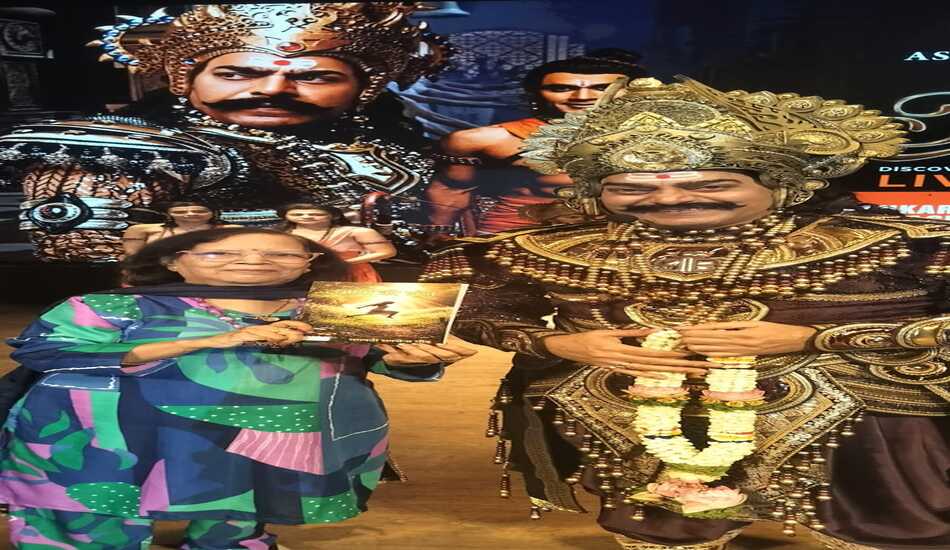
A Play That Opens Old Doors Watching Hamare Ram, with Ashutosh Rana as Ravan, felt like reading several Ramayans in one evening. The writer has stitched together scenes from different tellings, and that choice itself teaches us something. The Ramayan was never one fixed book. It is a river that changed its colour as it passed through each land and language. Ravan as Priest: The Southern Memory The first scene comes from the southern tradition, popularly linked with Kamban’s Tamil Ramayan. Before crossing the sea, Ram needs a learned priest to perform the pooja for the bridge at Rameswaram. He invites Ravan, the greatest scholar of the age. Ravan accepts, but a ritual of this kind needs the wife beside the husband. So Ravan brings Sita to sit with Ram, completes the pooja with full respect, and takes her back to Lanka. Scholars note that this tale lives mainly in regional and folk memory rather than in Valmiki’s text, which shows how each region added its own thoughts about dharma and duty. The Dying Teacher: Krittibas of Bengal The closing scene comes from the Bengali Ramayan of Krittibas Ojha, written in the fifteenth century. As Ravan lies dying, Ram asks Lakshman to go and take his blessings, because a learned man deserves respect even at the end. Bengal gave us a Ramayan full of feeling and humanity. Even the enemy is seen as a great soul, and that is why this scene touches the audience so deeply. The Persian Voice The Ramayan also found a home in the Mughal court. Under Akbar, Persian translations were prepared, and later, in 1715, Sumer Chand produced another Persian version. These efforts show that the story crossed the walls of religion. Kings and scholars who read Persian could now enter the world of Ram, and many beautiful illustrated copies were made. My grandfather used to read the Ramayana in Urdu. From Shruti to Valmiki Before it was written, the story travelled by voice. Bards and singers memorised and passed it down, which is why we speak of a Shruti tradition, learning by listening. Valmiki gave this tale its first great poetic form in Sanskrit, and he is honoured as the first poet. Buddhist and Jain writers soon told their own versions. The Dasharatha Jataka and the Jain work Paumachariya of Vimalasuri are good examples. The Regional Languages After Valmiki, nearly every language of India made Ram its own. Tamil has Kamban’s Iramavataram from the twelfth century. Telugu has the Ranganatha Ramayana and the Molla Ramayanam. Kannada has the Torave Ramayana of Narahari. Malayalam has the Adhyatma Ramayanam of Ezhuthachan. Assamese has the Ramayan of Madhav Kandali from the fourteenth century. Odia has the Jagamohana Ramayana of Balaram Das. Bengali has Krittibas. Marathi has the Bhavartha Ramayan of Sant Eknath. Hindi has the Ramcharitmanas of Tulsidas, composed around 1574 in the Awadhi language. Tulsidas deserves special mention. He wrote in the speech of ordinary people, and his work reached villages, fields and homes. Even today, the chaupais of Manas are sung at weddings, festivals and funerals. The Sundar Kand Paath from the Ramcharitmanas is so popular that it is recited across all states of India — on Tuesdays, and in some states, on Saturdays. The Journey Abroad Traders, monks, sailors and kings carried the story over land and sea. Indonesia: The Kakawin Ramayana was composed in Java around the ninth century. The Prambanan temple carries Ramayan scenes in stone, and the Ramayan is still performed through dance and shadow puppets. Thailand: The story became the Ramakien. Kings of the Chakri dynasty took the name Rama, and the Grand Palace in Bangkok has long murals of the epic. Cambodia: Known as the Reamker, its scenes are carved on the walls of Angkor Wat. Laos and Myanmar: Laos tells it as Phra Lak Phra Lam, and Myanmar has the Yama Zatdaw, both mixed with local Buddhist thought. Malaysia The Hikayat Seri Rama carries the tale in Malay form, and shadow theatre keeps it alive. Philippines: Versions like the Maranao Radia Mangandiri show an old echo of the story among island communities. Nepal: Bhanubhakta Acharya wrote a beloved Nepali Ramayan in the nineteenth century, and Janakpur is cherished as Sita’s birthplace. Sri Lanka: The land of Ravan keeps its own memories, with many places linked to the epic and a tradition that remembers Ravan with pride. Tibet, Khotan and China: Tibetan and Khotanese manuscripts carry retellings, and Chinese Buddhist texts include story pieces from the Ramayan. Iran: The Persian translations made the epic known among Persian readers. Mauritius, Fiji, Suriname, Trinidad and Guyana: Indian workers who went there in the nineteenth century carried the Ramcharitmanas in their bundles. Ramlila and Manas recitation are still living customs there. What the Story Teaches Each country told the tale with its own flavour, yet the heart stayed the same: truth, duty, sacrifice and the struggle between right and wrong. The play reminds us that Ravan is not only a villain but also a scholar who fell because of pride. Ram’s humility in honouring even an enemy is perhaps the finest lesson of all. When we hear many Ramayans, we do not lose Ram. We find him in more hearts than we imagined.
guest

0 Comments
Oldest
Newest Most Voted