

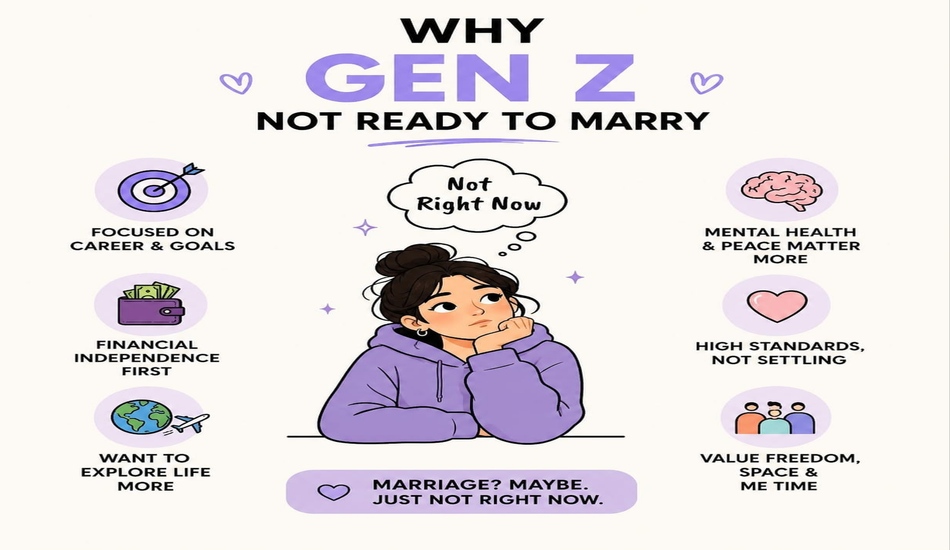


Gen Z fears marriage due to financial instability, rising divorce rates, and career priorities. They’ve witnessed broken homes and value independence over tradition. Commitment anxiety, mental health awareness, and preference for cohabitation without legal ties also fuel hesitation. Many want compatibility first, not societal pressure.
A Point-by-Point Discussion
Fear Is Not of Love, But of Wrong Marriage
Let us be clear from the start. Gen Z is not running away from love. They still dream of a loyal companion, a warm home, and a family. But what they fear deeply is a wrong marriage — one filled with toxicity, emotional pain, and the feeling of being trapped. They have seen enough broken relationships around them to know that a wedding ring does not automatically bring happiness. So their hesitation is not weakness. It is wisdom born from observation.
They Grew Up Watching Failed Marriages
This is perhaps the most powerful reason. Many Gen Z individuals spent their childhood watching parents fight constantly, couples staying together only because society expected them to, or relatives going through painful divorces. When a child grows up in that environment, a silent lesson gets registered in the mind — marriage does not guarantee happiness. That lesson never fully leaves. It makes them cautious, sometimes overly so, but the root is real lived experience, not imagination.
Financial Pressure Is Huge
Marriage today is not just an emotional decision — it is a financial project. Wedding costs, house rent, children’s education, healthcare, and job insecurity make young people pause. Unlike earlier generations who married first and built life together gradually, Gen Z wants a solid financial foundation before taking the plunge. They are not wrong. In today’s economy, with gig jobs and frequent layoffs, their caution reflects practical intelligence, not selfishness.
Career Comes Before Marriage
Gen Z spends their twenties intensely — studying, upskilling, switching jobs, launching startups, relocating to new cities or countries. In this phase, marriage feels like a heavy responsibility that could slow everything down. This is especially visible in metro cities like Bengaluru, Mumbai, and Delhi, where ambitious young people are laser-focused on building their career identity before settling into domestic life. They see marriage as something that deserves full attention — and they want to give that attention only when they are ready.
Social Media Created Unrealistic Expectations
Instagram and YouTube show luxury weddings, perfect couples on exotic vacations, and relationships that appear flawless. Real marriages are nothing like that. But young minds, constantly exposed to these curated images, begin believing that anything less than perfect is failure. This perfectionism becomes a trap. They keep searching for the ideal partner, the ideal moment, the ideal relationship — and in that endless search, commitment keeps getting delayed.
Fear of Losing Independence
Gen Z deeply values personal freedom — solo travel, private space, self-expression, and the right to make their own choices. Traditional marriage sometimes comes with a hidden cost: family interference, gender role expectations, loss of personal identity. Many young people genuinely ask, “Will marriage make me lose myself?” That is a fair question. And until they find convincing answers, they prefer to wait.
Equality Expectations Have Changed
Today’s young women want respect, shared responsibilities, career support, and emotional maturity from their partners. Many young men also want emotionally intelligent companions. But the mismatch remains real — some men still carry old-fashioned expectations while women firmly reject those ideas. This gap creates friction and uncertainty. When two people enter marriage with fundamentally different definitions of partnership, the result is conflict. Gen Z simply refuses to accept that silently.
Too Many Choices = Decision Paralysis
Dating apps have created an ocean of options. And paradoxically, too many choices make choosing harder. There is always the nagging thought — “What if someone better is just one swipe away?” This endless possibility weakens the ability to commit. When people feel they have unlimited options, they struggle to value what they already have.
Mental Health Awareness
Gen Z is the first generation to openly discuss anxiety, trauma, depression, and emotional boundaries. Many honestly say, “I need to heal first before I can be a good partner.” That is not avoidance — that is responsibility. Entering marriage while carrying unresolved emotional wounds only creates more pain for both people.
Fear of Legal and Social Complications
Divorce battles, alimony disputes, custody conflicts, and social shame — these fears, whether fully accurate or somewhat exaggerated, weigh on young minds and make marriage feel risky beyond the emotional level.
Summary
Gen Z does not fear marriage — they fear a wrong marriage. They have grown up with open eyes, seeing what blind commitment can cost. They ask hard questions before saying yes, because they understand that a lifetime is too precious to spend in misery. Their delay is not rejection of love — it is a quiet demand for better love. And perhaps, in asking these difficult questions before walking down the aisle, they are building the foundation for marriages that actually last.


Very nicely studied and explained.
Thanks for reading! Glad you liked the content..
I think in our male dominated society one is scared to lose their dominance at the same time as rightly mentioned in the blog equality expectations from the other side is adding to the complications. Slowly society accepting this. Let us think positively, some better would come out. Thanks for touching this topic.
Thanks for reading. I’m pleased you connected with the article on this key social issue and took the time to share your thoughts..