



At a time when radiology was dismissed by many doctors as little more than medical photography, one woman saw a future that others could not. She fought to bring advanced medical imaging technology to India, became the first woman to lead AIIMS and helped transform the way doctors diagnosed and treated patients.
Her name was Dr Sneh Bhargava. Born on June 23, 1930, in Ferozepur Cantonment, Punjab, Dr Bhargava grew up in a liberal family in which her father believed that daughters deserved the same opportunities as sons. Her childhood, however, was also shaped by the Partition of India. Having grown up in Lahore, she witnessed the suffering and displacement that accompanied the division of the country.
She pursued medicine and graduated from Lady Hardinge Medical College, Delhi, in 1953. At a time when very few Indian women were entering specialised medical fields, she chose radiology, a relatively unexplored speciality. She travelled to England, where she trained in diagnostic radiology at Westminster Hospital, becoming the first Indian woman in an otherwise all-male radiology class.
She returned to India determined to build a career in a field that had enormous potential but little recognition.
Bringing India’s First CT Scanner
Perhaps one of the most significant contributions of Dr Bhargava was her role in bringing India’s first CT scanner to AIIMS. During a professional visit to Massachusetts General Hospital in Boston in the early 1970s, she encountered the revolutionary possibilities of computerised tomography. She later attended a neuroradiology workshop in New York, where British engineer Godfrey Hounsfield demonstrated images produced using the new CT technology.She was astonished.
Until then, doctors largely depended on conventional X-rays and, in certain cases, invasive procedures to investigate conditions inside the body. CT scanning offered something extraordinary: the ability to see detailed cross-sectional images of internal organs, particularly the brain, without surgery. Dr Bhargava immediately recognised what this could mean for Indian medicine.
On returning to AIIMS, she approached its then Director, Dr Ramalinga Swami, and advocated for acquiring the technology. There was considerable resistance. The equipment was expensive, and many questioned whether a developing country like India could afford it.
But she persisted.
She approached cardiac surgeons, neurologists and neurosurgeons, explaining how CT scanning could improve diagnosis, help doctors make faster decisions and potentially save lives. She also worked towards securing international funding.
With support from the Swedish International Development Agency (SIDA), facilitated through India’s Ministry of External Affairs, AIIMS eventually acquired its first CT scanner in 1978. The machine cost approximately Rs 54 lakh, a substantial investment at the time. It transformed neurological diagnosis and attracted patients from neighbouring countries, including Nepal, Bangladesh and Sri Lanka. But Dr Bhargava wasn’t finished.
She also championed the introduction of ultrasound technology at AIIMS. After travelling to Denmark to train in ultrasound, she convinced the institution to acquire the equipment, highlighting its importance, particularly in obstetrics and the examination of pregnant women.
These were not merely technological additions. They changed the possibilities of medical diagnosis in India.
The First Woman to Lead AIIMS
Dr Bhargava joined AIIMS in 1961 as an Assistant Professor of Radiology. Over the next three decades, she rose through the ranks, eventually becoming Professor and Head of the Department of Radiology.
She worked to establish radiology as an essential medical speciality, strengthening postgraduate education and developing specialised departments, including neuroradiology, cardiovascular radiology, paediatric radiology, oncoradiology and interventional radiology.
In 1984, she made history by becoming the first woman Director of AIIMS, New Delhi. She held the position until 1990 and remains the only woman to have led the institution.
Her first day as Director, October 31, 1984, became one of the most extraordinary days in India’s history. Prime Minister Indira Gandhi was shot and rushed to AIIMS. Dr Bhargava found herself leading the institution amid an unprecedented national crisis.
Following the assassination and the anti-Sikh riots that erupted across Delhi, she also took steps to protect Sikh members of the AIIMS staff. She opened her home to those seeking safety and helped organise outpatient medical services at Delhi government schools where displaced Sikh families had taken refuge.
Her directorship was marked by difficult institutional decisions, political pressures and the responsibility of maintaining the standards of one of India’s most important medical institutions.
A Lifetime Beyond AIIMS
Her contribution to healthcare did not end with her tenure as Director.
After spending 30 years at AIIMS, she went on to devote another three decades of her professional life to building the Sitaram Bhartia Institute of Science and Research and Dharamshila Narayana Superspeciality Hospital, both in New Delhi.
Her work earned her several honours, including the Padma Shri in 1991 and the Millennium Award 2000 from the Indian Radiology and Imaging Association. In 2018, the Radiological Society of North America recognised her with honorary membership for her contributions to radiology education and medical imaging.
Still Learning at 95
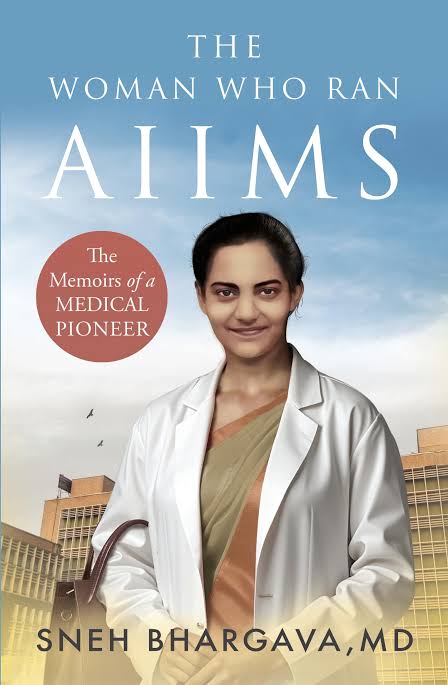
At 90, Dr Bhargava stepped away from active professional work and turned to writing. In 2025, she published her memoir, The Woman Who Ran AIIMS: The Memoirs of a Medical Pioneer, documenting her extraordinary life, from growing up in pre-Partition Lahore to leading India’s premier medical institution. But retirement did not mean giving up her curiosity.
At 95, she was still following developments in artificial intelligence and its applications in medical imaging. As Professor Emeritus at AIIMS, she continued to take an interest in scientific advances. She also enjoyed gardening, tending to her bonsai plants and working on another book about the history of radiology. In a world where professional success is often measured by positions and awards, Dr Sneh Bhargava’s story stands out for something much deeper.
She helped bring India’s first CT scanner to AIIMS, transformed radiology into a respected medical speciality, led one of the country’s most prestigious institutions and spent decades building healthcare facilities for future generations. She did not simply break a glass ceiling. She changed what Indian medicine could achieve.

