



What We Assume, What We Miss
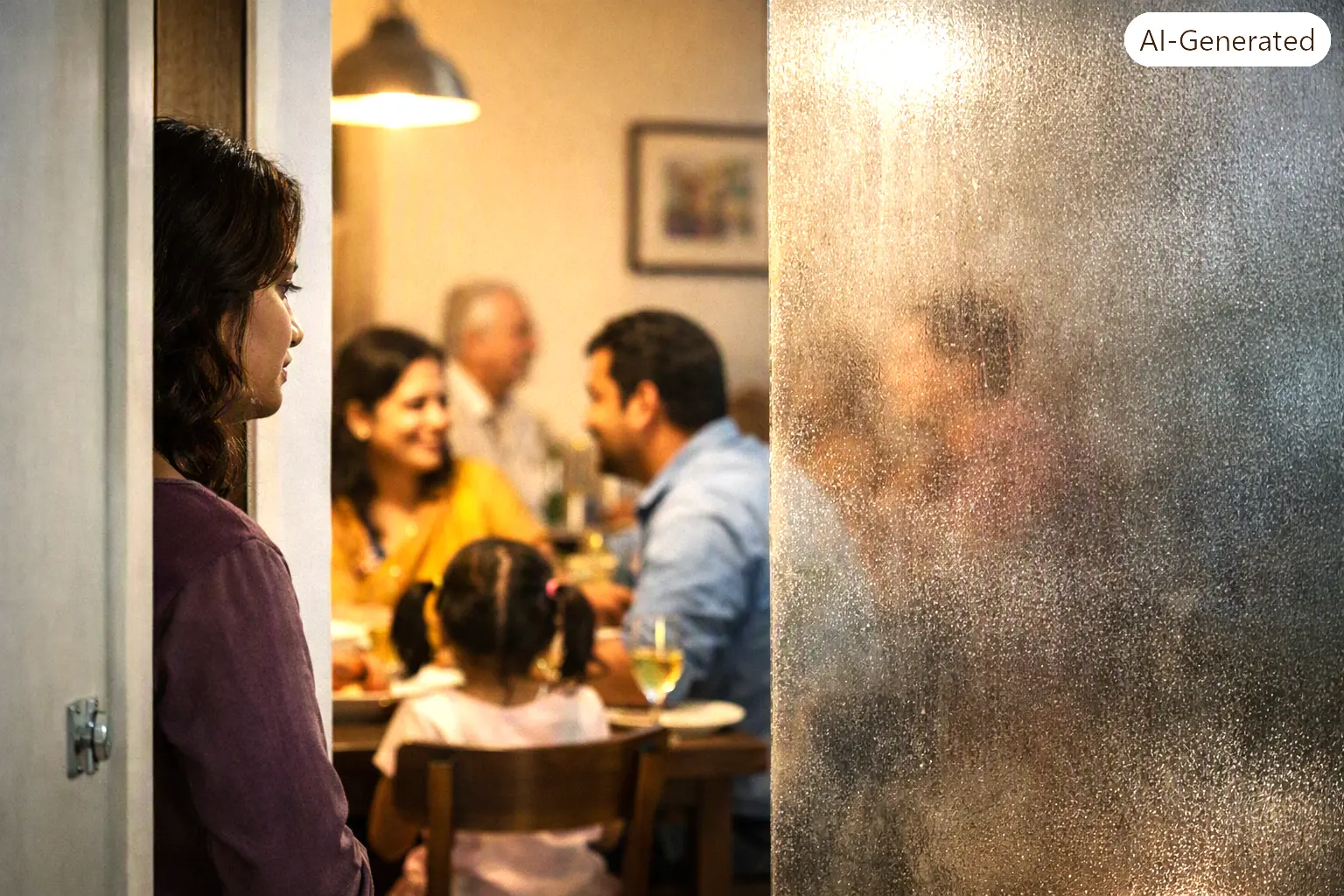
In Hyderabad, I had a young neighbour—a new mother named Suvarna. Her husband and I worked in the same company, which should have made familiarity easy. We crossed paths now and then at the gym, but our conversations never went beyond polite nods and monosyllabic replies. She was curt, distant, almost guarded. I couldn’t place why, and after a while, I stopped trying.
Polite Distance and Unspoken Walls
As months passed, our interaction narrowed to something simpler and sweeter—me playing with their baby girl. The child responded with giggles and curiosity, unburdened by whatever invisible wall existed between her mother and me. Yet Suvarna’s behaviour remained unchanged. There was no warmth, no invitation into her world, just a quiet distance that felt deliberate.
A Farewell That Changed Everything
A year later, it was time for me to move on. Before leaving, I decided to host a farewell party and invited everyone from the building to dinner at Ohri’s, Madhapur.
During my stay, the apartment had become more than just a place to live. Of the sixteen families in the building, I had come to know nearly ten. They had welcomed me into their homes, shared casual dinners, exchanged friendly conversations in the parking lot, and spent leisurely Sunday evenings over tea. Those simple interactions had created a warm sense of belonging, and the dinner was my way of thanking them for making my time there so memorable.
Six families turned up, bringing with them laughter, conversation, and an unexpected glow to the evening. Among them were Suvarna and her husband, along with their little daughter. That night, something shifted. She smiled easily, spoke freely, and seemed—finally—at ease.
The Moment of Truth
Then, in front of everyone, she said words I hadn’t anticipated.
“I’m so happy I came today. Now I realise I missed so much. I didn’t know, Sneha, that you are a widow. You don’t look your age. I didn’t know you had a grown-up son. I thought you were a single woman, probably divorced, and I resented you for leaving your family to enjoy living alone. I feel terribly foolish…”
A hush fell over the table. No one knew quite what to say.
What Silence Teaches Us
I smiled—not out of triumph, but with understanding—and said gently, “You should have asked me. Or perhaps asked another neighbour. Your assumptions kept us from getting to know each other.”
There was no bitterness in my voice, only honesty. Perhaps that is why the awkward silence didn’t last long. Soon the laughter returned, conversations picked up where they had left off, and the evening became what it was always meant to be—a gathering of neighbours sharing good food and good company.
As I drove home that night, I kept thinking about how easily we write stories about people without knowing a single chapter of their lives. We observe, interpret, conclude—and rarely pause to ask if we’ve got it right.
How many friendships never begin because of assumptions? How many connections are lost because curiosity gives way to judgement?
A Soft Closing
Sometimes, the distance between two people isn’t created by differences—but by stories we invent and never verify.
What story might you be telling yourself about someone—without ever asking if it’s true?


This beautifully captures human psychology.
We create our own narratives about people and cement our behavior toward them, without verifying the facts.
Very well expressed.👏
A nice observation and conclusion. Not everybody comfortable with strangers.
We easily judge people and form and impression about the people around. Our brain then takes time to come out of this assumption which was made earlier. Open talks removes such misunderstanding but initiating it also requires someone to take the first step. It is about how you want to take the relationship.