

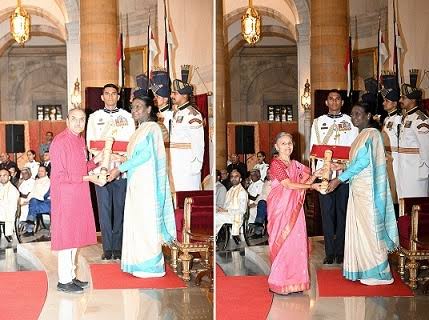


Seven days after their wedding in February 1990, Ramchandra and Suneeta Godbole arrived in Barsur, a remote village in Bastar. They had not come looking for an easier life.
Dr. Ramchandra Godbole, an Ayurvedic physician from Maharashtra, had been deeply influenced by the life of Dr. Albert Schweitzer. The idea that medicine could be a form of service, not simply a profession, stayed with him.
After working with tribal communities in Maharashtra, he was sent to Barsur in Dantewada district, where a health centre had remained closed for years.
The organisation he was associated with suggested he should marry before taking on such a difficult assignment. He met Suneeta Puranik, a social worker from Pune involved in women’s empowerment and literacy work. Their shared commitment to service brought them together.
Within days of their marriage, they moved to Bastar. What they found was a world far removed from conventional healthcare.
Many villages had no roads, electricity or mobile connectivity. Reaching a hospital could mean an exhausting journey through forests, while poverty, language barriers and unfamiliarity with the outside world kept many tribal families away from formal medical care. So the Godboles took healthcare to them.
Living in a modest home in Barsur, they began treating patients with whatever resources they could carry. Dr. Ramchandra travelled into remote villages, while Suneeta worked closely with women and children, focusing on health awareness, nutrition and community welfare. Dr. Ramchandra also learned the local Halbi language to communicate more easily with patients and build trust.
Their work continued through years of conflict and insecurity in Bastar. Through their Trust for Health, they provided free medical care, organised health camps, spread awareness and worked to tackle malnutrition among tribal communities.
Government and news reports say they have served the region for more than 37 years, including in remote areas such as Bastar and Abujhmad.
But their contribution was never limited to treating illness. They worked with communities on preventive healthcare, child nutrition and health awareness, while Suneeta’s social work focused particularly on women and children. Over time, the couple became trusted members of the communities they had come to serve.
Their own lifestyle remained remarkably simple. They chose to live among the people rather than commute from a distant city, making Bastar not merely their workplace but their home. After more than three decades of this quiet service, national recognition finally arrived.
In 2026, the Government of India honoured Dr. Ramchandra Godbole and Suneeta Godbole with the Padma Shri in Medicine, recognising their contribution to healthcare among underserved tribal communities.
The award may have brought their names into the national spotlight. But in Bastar, their greatest recognition had already come much earlier, in the trust of people who knew that when illness arrived, Doctor Bhaiya and Bhabhi would come too.

