

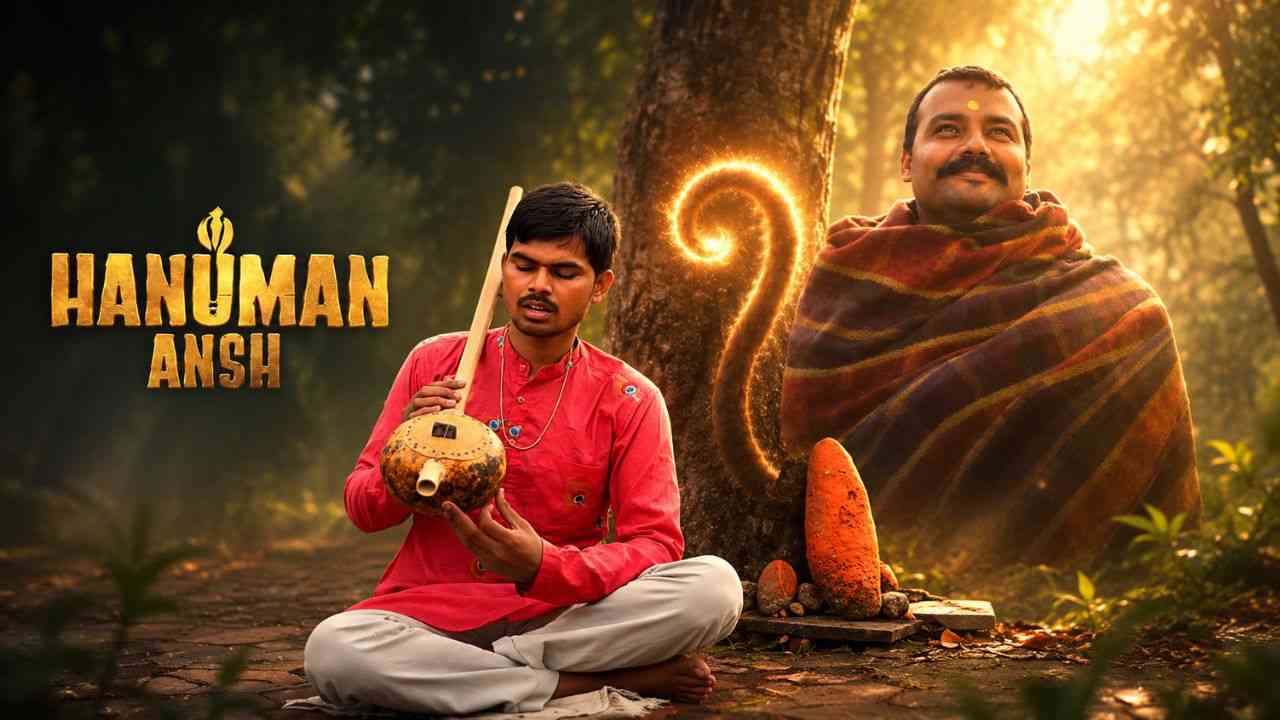


For years, Sunil Lodhi’s world was not a recording studio or a film set. It was a small village in Madhya Pradesh, a tambura in his hands and the sound of bhajans filling local gatherings.
Today, that same voice is being heard across India through the popular devotional song “Maine Tere Hi Bharose Hanuman, Sagar Mein Naiya Daal Dai” from Hanuman Ansh.
Sunil, 25, comes from Agra village in Sagar district and was born visually impaired. His father, Mahendra Singh Lodhi, is a farmer, while his mother, Bhag Bai, is a homemaker. The family has lived a simple rural life, supported by limited agricultural land and hard work. Sunil is the eldest among four siblings.
His blindness meant that many ordinary opportunities were never easily available to him. He could not attend school, and as his mother has recalled, people in the village sometimes mocked him for being blind. But while the world focused on what Sunil could not see, he was discovering something he could do remarkably well—sing.
Music entered his life naturally. As a child, Sunil began listening closely to songs and bhajans and learnt largely by himself. He was particularly influenced by Lata Mangeshkar. By around 10 or 11, he had learnt to play the tambura and started singing among elders, at village gatherings and religious events.But talent alone did not make life easy.
For a long time, Sunil sang wherever there was an audience—at village gatherings and even inside trains, carrying his tambura and bhajans with him. There were no studios, no formal music training and no industry connections. His stage was wherever someone was willing to listen. His voice, practice and faith were what he had. Then came the turning point.
A recording of Sunil singing a traditional Bundeli Hanuman bhajan circulated on social media. His rendition of “More Sankat Ke Kataiya”, accompanied simply by his voice and tambura, caught attention. The recording eventually reached people connected to the music industry, including producer Pankaj VRK, and Sunil was invited to Mumbai for professional recordings. One of those recordings found its way into Hanuman Ansh, a film based on the life of Neem Karoli Baba.
The success of Hanuman Ansh has given Sunil a national audience, new performance opportunities and offers from the film and music world. But perhaps the most powerful part of his journey is that the voice never had to become something else to be noticed. It remained simple. It remained rooted. And it carried with it the soil of Bundelkhand, years of struggle and a devotion that Sunil has nurtured since childhood.
Sometimes, the biggest stage does not create a voice. It simply gives the world a chance to finally hear it.

